Reading the Room on a Remote Team Is a Skill You Build, Not One You Bring
Distributed teams lose the ambient signal that in-person teams read for free. The fix isn't better cameras — it's replacing intuition with deliberate ritual that makes emotional data visible again.
There’s a quiet assumption baked into most remote-work advice: that reading the room is a talent some people have, and remote work just makes it a little harder to use. Turn on cameras, add more one-on-ones, and the people who were good at reading a room in person will be good at it on a call.
That assumption is wrong, and it’s the reason a lot of otherwise strong managers feel oddly blind on distributed teams. Reading a room in person is mostly automatic — you absorb tone, posture, pacing, and the pause before an answer without deciding to. Remote work removes almost all of that signal, and the automatic skill simply has nothing to run on. What replaces it isn’t a better instinct. It’s a deliberate practice, and it has to be built on purpose.
What you actually lose
The instinct for reading a room runs on ambient signal — the constant, low-bandwidth stream of cues that surrounds any in-person interaction. Who leaned back when a decision landed. The half- second of hesitation before someone said “sure.” The energy in the room shifting when a topic came up. None of it is spoken, and all of it is information.
A video call keeps a thin slice of this and drops the rest. Faces are boxed and often off. Latency flattens the timing that carries so much meaning. Nobody can see who’s checked out, and the person who would have caught your eye across a table has no way to catch it now. Asynchronous work removes even the faces — you’re reading tone off a message with no body attached to it. The emotional data a team runs on hasn’t disappeared, but the channel that used to deliver it for free is mostly gone.
The failure mode this produces is specific and dangerous: silence reads as agreement. In a room, a quiet person radiates their discomfort and someone notices. On a call, quiet is just quiet. A team can roll straight past a serious concern because the person holding it had no ambient way to signal it and didn’t feel it was worth interrupting for. That’s the same missed signal that degrades emotional intelligence on any team, amplified by a medium that hides it.
Deliberate beats intuitive when the bandwidth is gone
The teams that stay perceptive while distributed don’t do it with better intuition. They do it by making the invisible explicit — replacing ambient signal with structure that surfaces the same information on purpose. It feels heavier than an in-person team needs, and it is. That weight is the cost of the bandwidth you lost, and paying it is cheaper than the alternative.
Ask instead of infer. In person you read the room. Remote, you have to poll it. A direct “what’s the reservation nobody’s saying?” or a quick round where everyone names one concern recovers, on purpose, the signal you used to absorb automatically. It feels blunt. It works.
Make space for the quiet person structurally. The people who fade on calls are often the ones with the sharpest doubts. A norm that explicitly invites the quiet voice — a round-robin, a written pass before the discussion, a direct ask — does structurally what a glance across a table used to do informally.
Move the hard signal to writing. Written surfacing of tension has an underrated advantage: it doesn’t depend on catching a fleeting cue in real time. When “here’s what’s worrying me” is a normal written move, the concern lands whether or not anyone was watching a face at the right moment. It also gives asynchronous teammates a real channel instead of a lossy one.
Treat the check-in as instrument, not ritual. A structured check-in where the team’s emotional state is a legitimate item — not a warm-up to skip when you’re busy — is how a distributed team takes a reading it can no longer take by feel. Skipping it when the work gets hard is exactly when you most need the reading.
Why safety is the hidden dependency
None of these moves work on a team where it isn’t safe to be honest. Ask “what’s the reservation nobody’s saying?” on a team with low psychological safety and you’ll get a polite nothing — and now you’ve confirmed to yourself that everything’s fine when it isn’t. The deliberate practices that replace ambient signal only surface real data if people trust that surfacing it is safe. Remote work raises the stakes on psychological safety, because when candor stops, you lose the one channel you had left. In person, an unsafe team at least leaks its discomfort through body language. Remote, an unsafe team just goes quiet, and you’ll never know what you missed.
The reframe
Reading the room remotely isn’t a diminished version of an in-person skill. It’s a different skill with a different mechanism: deliberate surfacing in place of ambient absorption. Managers who accept that stop waiting for their instincts to kick back in over video and start building the structure that makes emotional data visible again.
The teams that do this well don’t feel more natural than an in-person team. They feel more intentional — and on a distributed team, intentional is the only kind of perceptive there is.
The size of the gap is easy to underestimate. On a fully distributed team, our read is that well over half of the emotional signal an in-person manager absorbs for free simply never arrives — which is exactly the share a deliberate ritual has to reconstruct on purpose.
Related reading
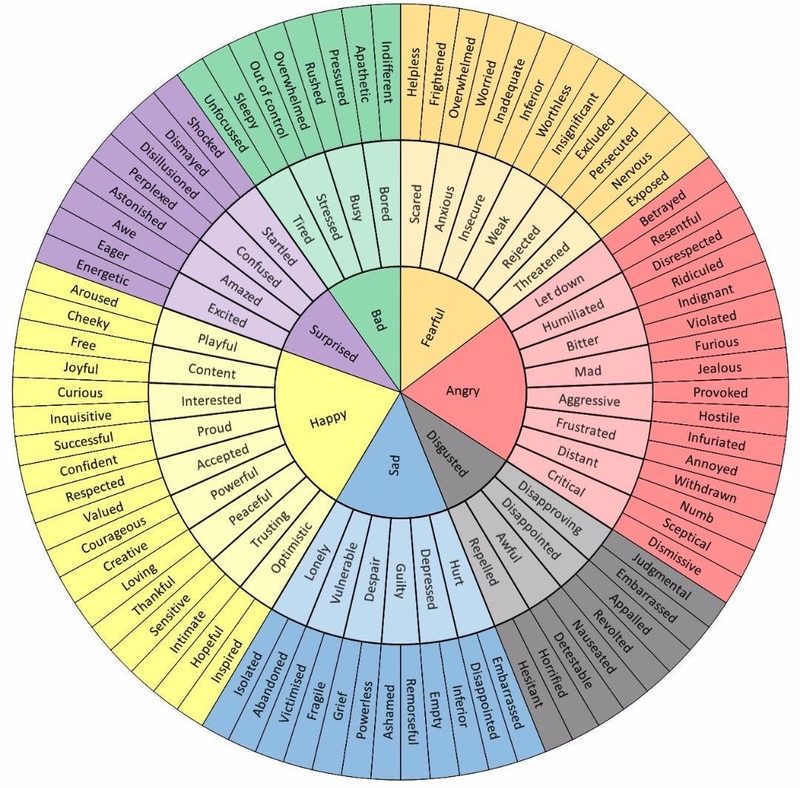 Name It to Tame It: The Feeling Underneath the Feeling "Fine" and "stressed" aren't emotions — they're escape hatches. The precise word for what you're feeling is the one that changes what happens next.
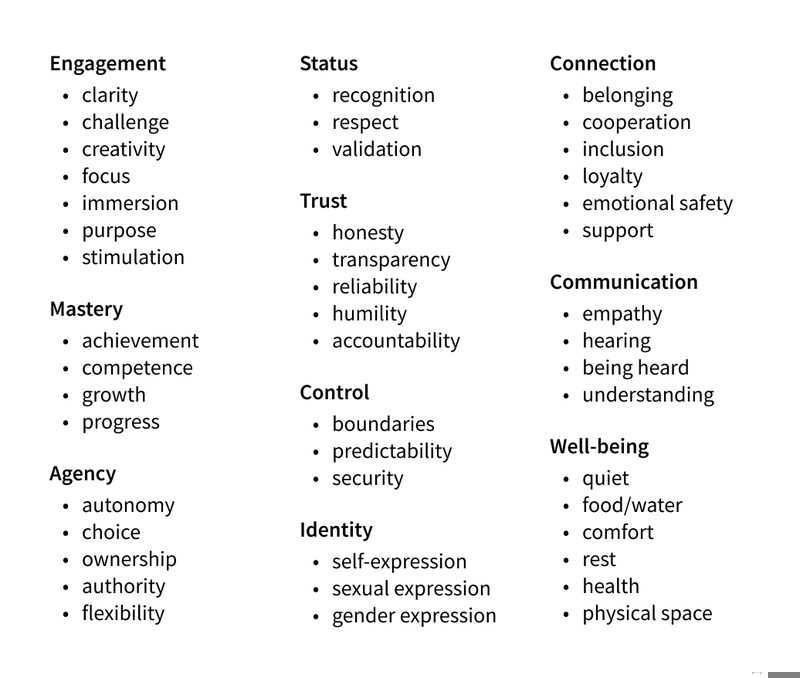 You're Not Too Sensitive — You Have an Unmet Need Every trigger is a need asking to be heard. Name the need underneath the reaction and you stop fighting people and start solving the actual problem.
 Your Emotions Didn't Start With You — They Were Taught Before you had words for them, you learned which emotions were safe to show and which ones to hide. Naming that early conditioning — and what it still costs you at work — is where emotional intelligence actually begins.