Name It to Tame It: The Feeling Underneath the Feeling
"Fine" and "stressed" aren't emotions — they're escape hatches. The precise word for what you're feeling is the one that changes what happens next.

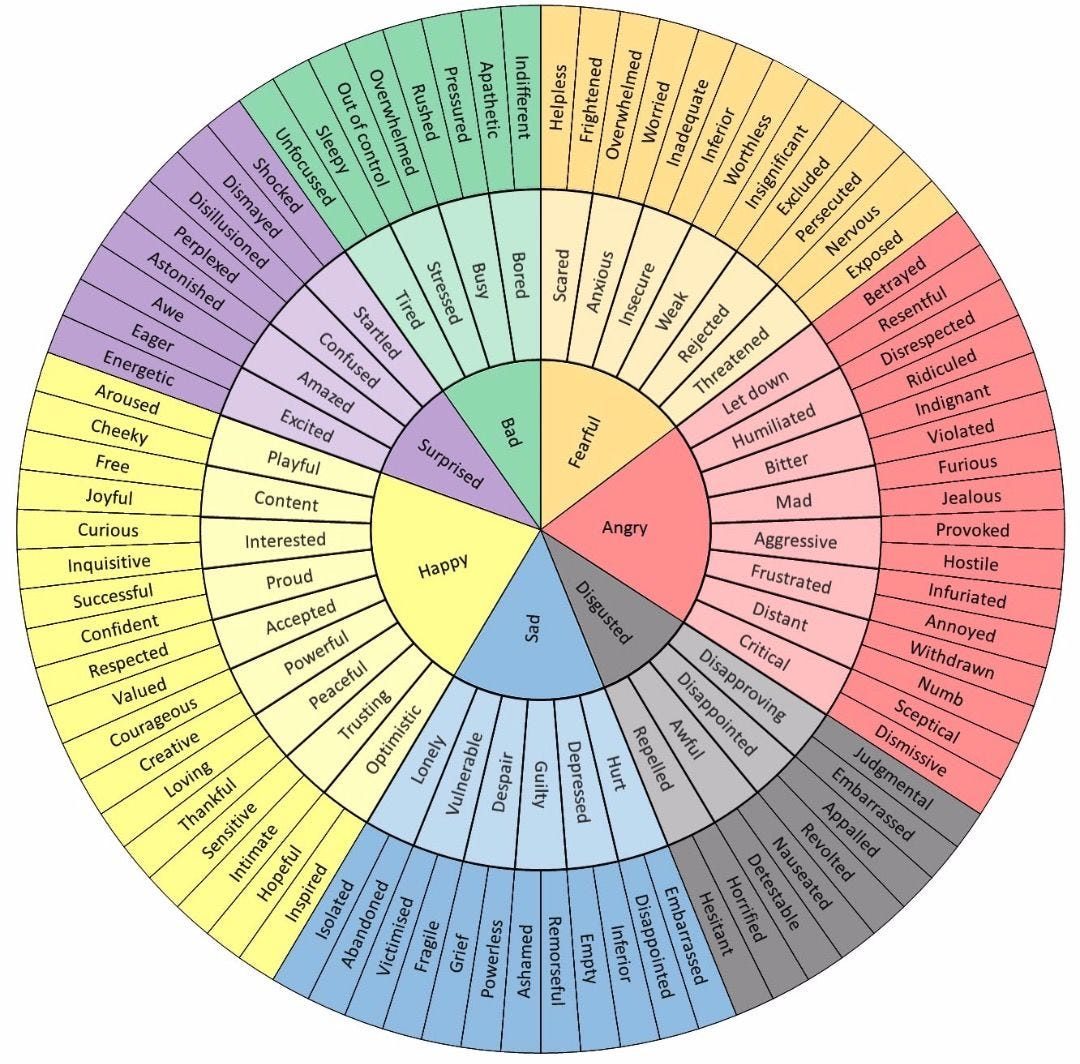
“Fine” is not an emotion. Neither is “stressed,” “busy,” “off,” or “whatever.” They are escape hatches — words we reach for precisely so we don’t have to feel around for the real one. They end the conversation with ourselves before it starts.
The cost of that shortcut is higher than it looks. Neuroscientist Dr. Matthew Lieberman has spent years studying what he calls affect labeling — the simple act of putting a feeling into precise words. His work found that naming an emotion accurately can reduce its intensity by up to 50 percent. Not by suppressing it. By naming it. The moment you move from “I’m stressed” to “I feel dismissed and a little scared,” the alarm part of your brain quiets and the thinking part comes back online.
That is why we say: name it to tame it. But you can only tame what you can name — and most of us are working with a vocabulary of about four feelings when the situation calls for forty.
Researchers have a term for the fineness of those distinctions: emotional granularity. People with more of it — who can tell “disappointed” from “resentful” from “let down” — recover from stress faster and make wiser choices about what to do next. It is a skill you build, not a temperament you’re born with. And like most of self-awareness, it starts with the emotions you were taught, early on, not to look at too closely.
Surface, deeper, root
At SynerQ we teach the Emotion Wheel as three layers, not one label. Every strong feeling has a surface, a deeper layer beneath it, and a root underneath that.
Think of it as an emotional jacket. On the surface you are wearing the emotion that is easiest to feel or show — often anger, or a flat “I’m fine.” But underneath the jacket of anger is frequently something more vulnerable: fear, or hurt, or shame. And underneath that is usually the real thing — feeling unseen, or not good enough, or unsafe. The top floor is your first reaction. The floors below it are where the actual signal lives.
All of the hundreds of words we use trace back to a handful of core emotions — happy, sad, afraid, angry, disgusted, surprised. The Wheel exists to help you travel from the vague core outward to the precise word, and then downward from the surface to the root.
Get curious, not defensive
Here is the move. When a strong emotion shows up, don’t argue with the surface issue and don’t rush to fix it. Pause and get curious about what is under the jacket. Ask yourself: is this really what I’m feeling, or is there something underneath? Go one layer deeper. Then one more.
And then ask the question that does the real work: what does this emotion need?
That last question is the hinge. A surface emotion wants to react. A root emotion, once you’ve named it, can tell you what it actually needs — to be heard, to be reassured, to be given a little room. That is information you can act on.
Picture a small, ordinary version. A teammate reworks something you built without asking first. The surface emotion is irritation. One layer down, it’s probably feeling disrespected. One more, and it’s often something quieter — the worry that your work isn’t valued, that you’re becoming invisible on the team. The irritation wants to fire off a sharp message. The root — feeling unseen — needs something completely different: to be acknowledged. Only one of those two responses leads anywhere good, and you can’t choose it until you’ve named which one you’re actually in.
Try it with your SQ Coach:
I’m feeling ___ right now. Help me go two layers deeper on what’s underneath it, and then tell me what this emotion might be protecting or needing.
Give it the real one, not the tidy one.
Why precision changes everything
Surface emotions are symptoms. Root emotions are the signal. When you treat the symptom — snapping at the surface issue — the same reaction comes back next week, because nothing underneath got addressed. When you name the root, you stop treating symptoms and start responding to causes.
There is a relationship dividend, too. When you can say the vulnerable thing underneath the anger — “I felt overlooked” instead of “you never listen” — the person across from you softens. People defend against surface attacks and open up to honest feelings. Precision doesn’t just calm you down; it changes the conversation.
This is the single most practical emotional-intelligence skill you can build, and it compounds. The more precisely you can name what you feel, the faster you recover, and the more you trust yourself to handle whatever comes next.
It compounds on a team, too. A group that can say “we’re anxious about this deadline” instead of just “we’re slammed” makes better decisions than one that only has escape hatches, because it’s naming the actual thing in the room. Precise language is contagious in both directions — one person naming a feeling honestly gives everyone else permission to do the same.
So this week: the next time you catch yourself reaching for “fine,” stop and find the more accurate word. Go one layer deeper than your first answer. What you name for yourself is often exactly what someone near you has been circling and couldn’t say.
Awareness first. Processing next. SynerQ always. ∞
Related reading
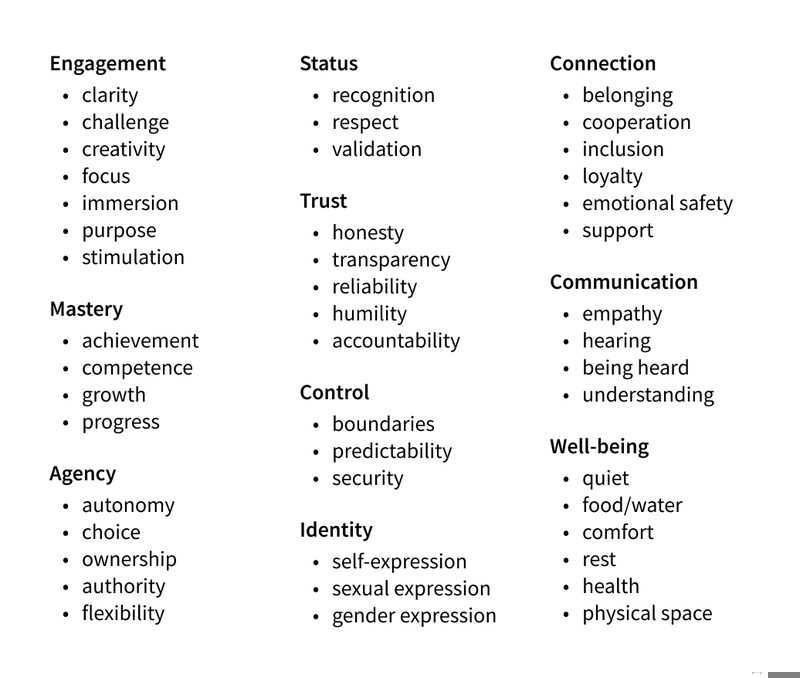 You're Not Too Sensitive — You Have an Unmet Need Every trigger is a need asking to be heard. Name the need underneath the reaction and you stop fighting people and start solving the actual problem.
 Your Emotions Didn't Start With You — They Were Taught Before you had words for them, you learned which emotions were safe to show and which ones to hide. Naming that early conditioning — and what it still costs you at work — is where emotional intelligence actually begins. The Meeting You Can't Stop Replaying — and What Your Body Already Knows Every week there's one meeting you can't stop replaying. That's not weakness — it's information. The practice is naming it in one word, so the next meeting lands different. Psychological Safety Is the Price of Admission for Honest Feedback Feedback culture doesn't fail because people lack candor. It fails because it isn't safe to be candid. Psychological safety is the precondition, and it's built through response, not permission. Emotional Intelligence on Teams Is a System Property, Not a Personality Trait Emotional intelligence on a team isn't the sum of individual EQ scores. It's a property of how the team notices, names, and responds to what people are feeling — and it can be built deliberately.