Your Emotions Didn't Start With You — They Were Taught
Before you had words for them, you learned which emotions were safe to show and which ones to hide. Naming that early conditioning — and what it still costs you at work — is where emotional intelligence actually begins.


Before the age of 10, your brain had already learned which emotions were safe to show and which ones got you rejected, punished, or ignored. You did not choose those lessons. You absorbed them — from the adults around you, from what earned a warm response and what earned a cold one, long before you had language for any of it.
Research on early development is consistent on this point: our first emotional experiences shape the actual architecture of the brain. In the earliest years of life, more than 1 million new neural connections form every second, and the emotional environment we grow up in helps decide which of them are reinforced and which fade. Dr. Bruce Perry’s work shows how the patterns we form in childhood wire in defaults — reflexes for what to feel, what to hide, and how to protect ourselves — that we still run, automatically, as adults in meetings and relationships decades later.
Which means the first step toward emotional intelligence is not fixing yourself. It is understanding yourself. Awareness is always the beginning of freedom.
The defaults you never agreed to
Think about the emotion you were not allowed to show growing up. For a lot of people it is anger — “don’t get emotional” was the household rule. For others it is sadness, or fear, or even joy that felt too big for the room. Whatever it was, you learned to manage it. You learned to make it small, or quiet, or invisible.
That management strategy did not disappear when you grew up and started working. It just got more sophisticated. The person who learned that anger was dangerous now swallows disagreement in a meeting and vents about it privately later. The person who learned that needs were a burden now says yes to everything and quietly burns out. The pattern is old. The setting is new.
None of this is a character flaw. It is conditioning. And conditioning can be seen, named, and — with practice — rewritten.
The Emotional Conditioning Map
At SynerQ we walk people through a simple map to make the invisible visible. Five moves, in order:
- What I learned to feel — the emotions that were welcomed, rewarded, or modeled for me.
- What I learned to hide — the emotions that got me rejected, punished, or ignored.
- How it shows up today — the adult behavior that pattern produces now, at work and at home.
- What it costs me — the price I quietly pay for keeping that emotion hidden.
- The new permission — the thing the younger version of me was never allowed, that I can choose to give myself now.
The power is in doing it in sequence. Most people can name the emotion they hide. Far fewer have connected it to what it is costing them right now — and almost nobody has stopped to give themselves the permission that was withheld all those years ago.
Get curious, not critical
The instinct, once you see one of these patterns, is to judge it. Don’t. Start by getting curious instead. Ask: “where did I learn this?” Not to assign blame to anyone — parents included — but to understand. Once you can see the root, you have a choice the child who first learned the pattern never had.
Here is a way to work it through with your SQ Coach:
Help me map one emotion I learned to suppress growing up — where it shows up for me today, what it costs me, and what new permission I can give myself now.
Give it a real one. Not the tidy version — the one you would rather not look at.
Why this is the foundation
When you understand your emotional conditioning, you stop reacting from the past and start responding from who you are now. That is not a small shift. People who do this work report feeling less hijacked, more self-compassionate, and more in control of their emotional responses within weeks — not because their circumstances changed, but because they finally saw the machinery running underneath them.
Everything else in emotional intelligence — naming feelings precisely, hearing the need under a trigger, choosing a different story in the moment — builds on this one piece of self-knowledge. It is the foundation. Start here.
So: what emotion were you not allowed to show growing up, and how does it show up for you today? Naming it is the whole practice. What you name for yourself may be exactly what helps someone else name what they have been carrying too.
Awareness first. Processing next. SynerQ always. ∞
Related reading
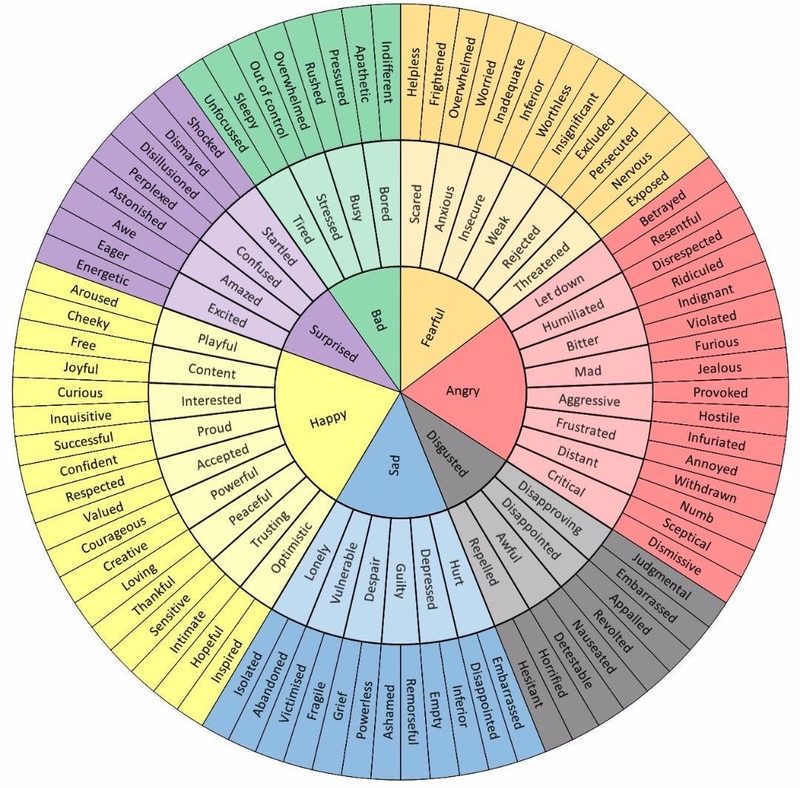 Name It to Tame It: The Feeling Underneath the Feeling "Fine" and "stressed" aren't emotions — they're escape hatches. The precise word for what you're feeling is the one that changes what happens next.
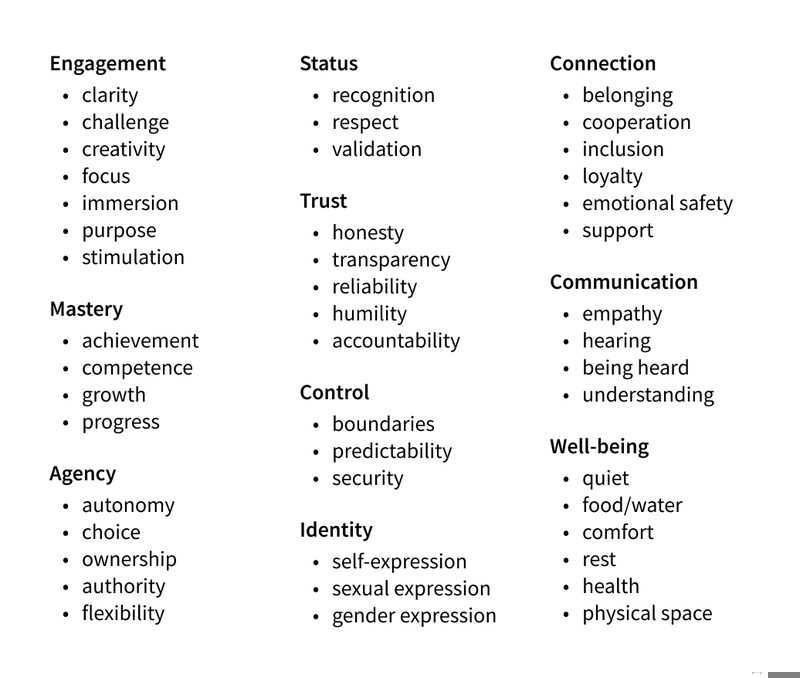 You're Not Too Sensitive — You Have an Unmet Need Every trigger is a need asking to be heard. Name the need underneath the reaction and you stop fighting people and start solving the actual problem. The Meeting You Can't Stop Replaying — and What Your Body Already Knows Every week there's one meeting you can't stop replaying. That's not weakness — it's information. The practice is naming it in one word, so the next meeting lands different. Emotional Intelligence on Teams Is a System Property, Not a Personality Trait Emotional intelligence on a team isn't the sum of individual EQ scores. It's a property of how the team notices, names, and responds to what people are feeling — and it can be built deliberately. Psychological Safety Is the Price of Admission for Honest Feedback Feedback culture doesn't fail because people lack candor. It fails because it isn't safe to be candid. Psychological safety is the precondition, and it's built through response, not permission.