Psychological Safety Is the Price of Admission for Honest Feedback
Feedback culture doesn't fail because people lack candor. It fails because it isn't safe to be candid. Psychological safety is the precondition, and it's built through response, not permission.
Every company says it wants a strong feedback culture. Most build the opposite by accident. They run the workshops, adopt the frameworks, put “radical candor” on a slide, and then wonder why the hard truths still only surface in exit interviews. The problem is almost never that people don’t know how to give feedback. It’s that giving it, in that room, on that team, isn’t safe — and no amount of technique survives that.
Psychological safety is the shared belief that you can raise a concern, admit a mistake, or disagree with someone senior without being punished for it. When a team has it, feedback flows as a normal byproduct of the work. When it doesn’t, feedback becomes an event — rare, tense, and usually too late to matter. You cannot bolt a candor practice onto a team that hasn’t paid the price of admission first.
Safety is inferred from response, not granted by policy
The most common mistake is to treat psychological safety as something leaders declare. “My door is always open.” “There are no stupid questions.” “Please, tell me what you really think.” These statements cost nothing and prove nothing. People don’t learn whether a team is safe from what leaders say they want; they learn it from what happens the last time someone took the risk.
That’s the mechanism worth internalizing: safety is a prediction, and people update it from evidence. The junior engineer who flagged a flaw in a senior’s design and got thanked for it just taught the whole room something. So did the one who got subtly frozen out afterward. Every response to a moment of candor is a training signal, and the team is always watching. This is why the noticing–naming–responding loop that defines emotional intelligence on teams runs directly through safety: naming the hard thing is only rational if the team’s track record of responding makes it survivable.
Studies of team performance consistently find that psychological safety is among the strongest predictors of whether a team learns, adapts, and catches its own errors — not because safe teams are softer, but because they surface problems early enough to fix them. Unsafe teams don’t have fewer problems. They have the same problems, discovered later, by which point they’re expensive.
Safe does not mean comfortable
The frequent objection is that a focus on safety produces a team too gentle to tell each other the truth. It’s exactly backwards. Comfort and safety are different variables, and high-performing teams score high on one and deliberately low on the other. A safe team is one where you can say something uncomfortable and expect to be met with engagement rather than retaliation. That combination — high candor, high safety — is where real feedback lives.
The failure modes are the two corners you want to avoid. High comfort with low safety is the polite team that never says anything real; everyone’s pleasant and nothing improves. Low comfort with low safety is the team where blunt criticism is a weapon and people learn to keep their heads down. The goal isn’t to make hard conversations feel nice. It’s to make them feel survivable, so people keep having them.
How to build it, concretely
Safety is built in the small moments, not the town halls. A few things move it reliably.
Respond well to the first hard thing. The single highest-leverage move is how a leader reacts the next time someone brings bad news or disagrees openly. Thank the person, engage the substance, and visibly change something when they’re right. One good response in public is worth ten policy statements.
Model fallibility from the top. Teams take their cue on what’s admissible from the most senior person in the room. A leader who openly says “I got that wrong” gives everyone else permission that no memo can. Candor flows downhill from visible fallibility.
Separate the person from the problem, out loud. Make it a norm that flagging a risk is a contribution, not an accusation. When surfacing a concern is framed as help rather than criticism, people do it earlier and more often.
Watch the quiet signals. The clearest sign a team is losing safety is that it goes quiet — fewer questions, fewer disagreements, less naming of tension. That’s the same signal an emotionally intelligent team learns to notice, and it’s much harder to catch when the team is distributed and you can’t feel the room. On a remote team, silence reads as agreement when it’s often the opposite, which is why reading the room at a distance has to become a deliberate practice rather than an instinct.
The payoff
A team that has paid for psychological safety doesn’t need a feedback framework. Feedback becomes ambient — small corrections happening constantly, problems named while they’re still cheap, people disagreeing without it becoming a referendum on the relationship. That’s not a softer team. It’s a faster one, because it spends far less energy managing what can’t be said and far more energy fixing what’s actually wrong.
Feedback culture, in the end, is downstream of safety, and safety is downstream of how you respond. Get the response right often enough and the culture builds itself. Get it wrong and no framework will save you.
In our own work with teams, the leading indicator is blunt: when the rate of surfaced concerns drops by more than half over a couple of weeks, a safety problem is already underway — long before it shows up in any engagement survey. Response, tracked over time, is the metric worth watching.
Related reading
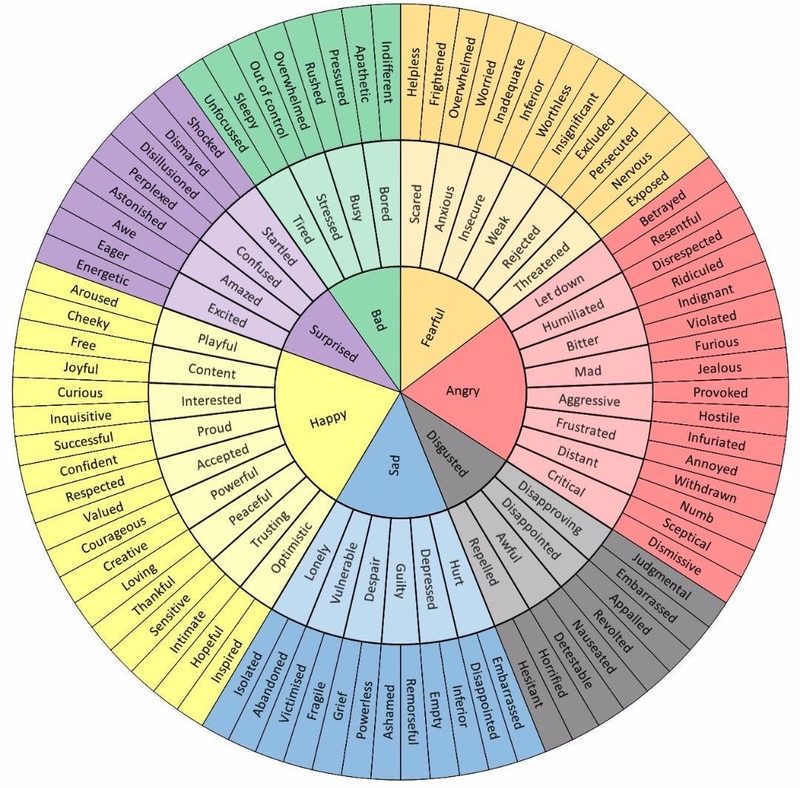 Name It to Tame It: The Feeling Underneath the Feeling "Fine" and "stressed" aren't emotions — they're escape hatches. The precise word for what you're feeling is the one that changes what happens next.
 Your Emotions Didn't Start With You — They Were Taught Before you had words for them, you learned which emotions were safe to show and which ones to hide. Naming that early conditioning — and what it still costs you at work — is where emotional intelligence actually begins.
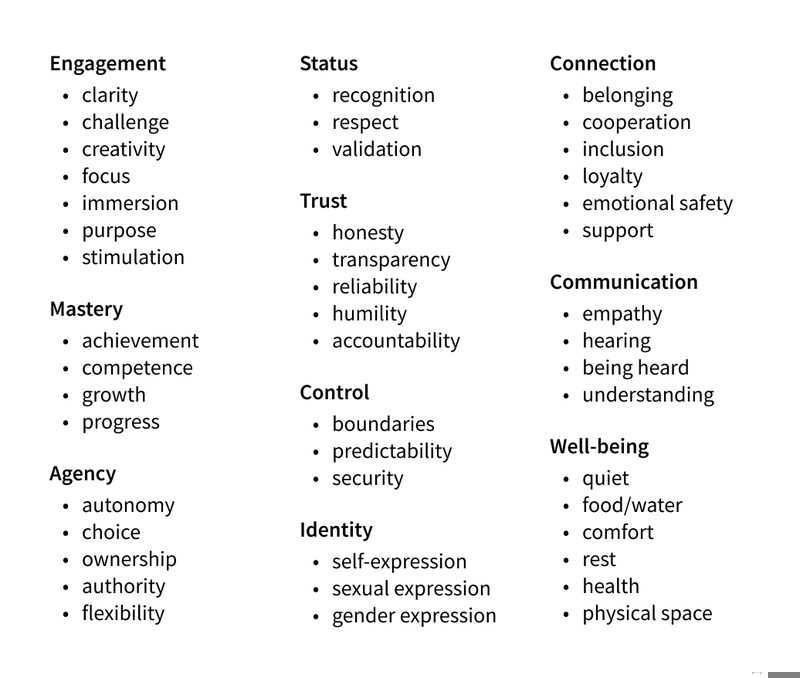 You're Not Too Sensitive — You Have an Unmet Need Every trigger is a need asking to be heard. Name the need underneath the reaction and you stop fighting people and start solving the actual problem.