You're Not Too Sensitive — You Have an Unmet Need
Every trigger is a need asking to be heard. Name the need underneath the reaction and you stop fighting people and start solving the actual problem.

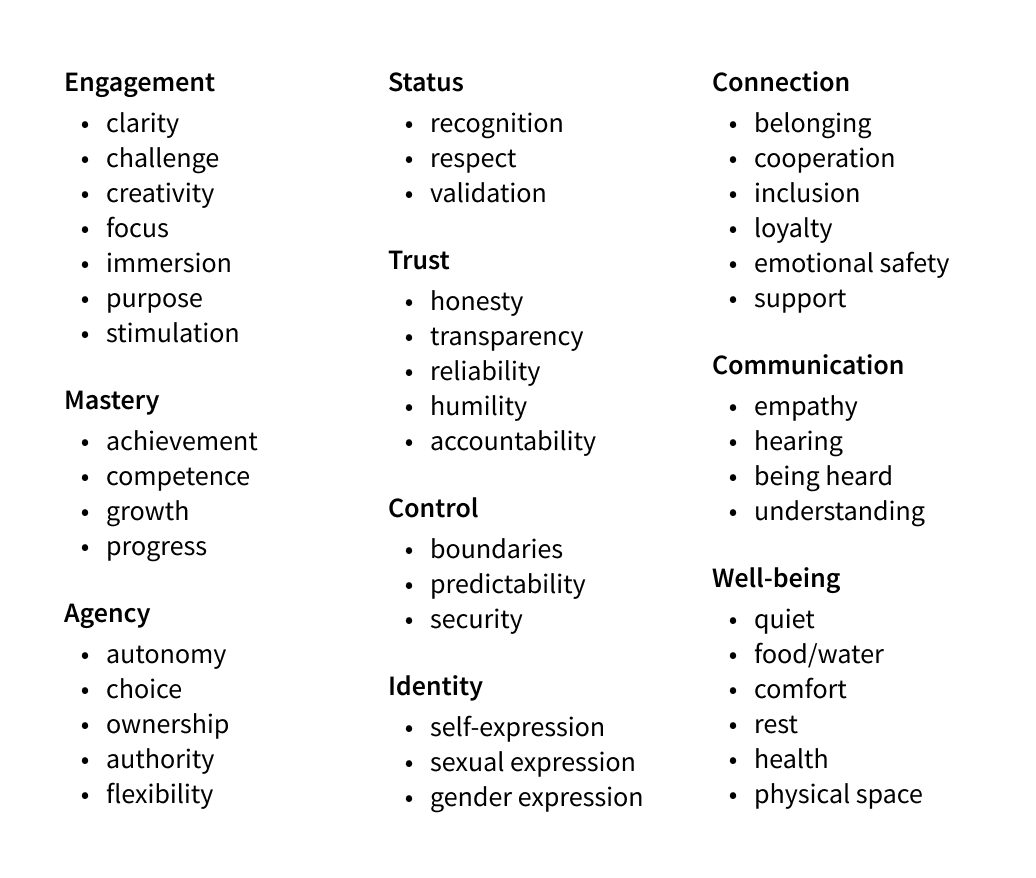
If you have ever been told you’re “too sensitive,” here is a more useful way to read that moment: you didn’t overreact. You had a need that wasn’t being met, and your reaction was the smoke from that fire.
Over more than 40 years of studying conflict, the psychologist Marshall Rosenberg arrived at a claim that sounds simple and turns out to be enormous: every reaction, every trigger, every conflict traces back to a need that isn’t being met. Not a character flaw. Not weakness. A need. The method he built around that idea — Nonviolent Communication — has been taught everywhere from hospitals to boardrooms to conflict zones, because it works on the cause instead of the symptom.
And needs are universal — the same short list runs underneath all of us: connection, respect, autonomy, belonging, rest, recognition, safety, contribution. When you can name the need underneath the emotion, you stop fighting the person and start solving the actual problem.
From reaction to request
At SynerQ we run this as a three-step move: emotion, then unmet need, then a clean request.
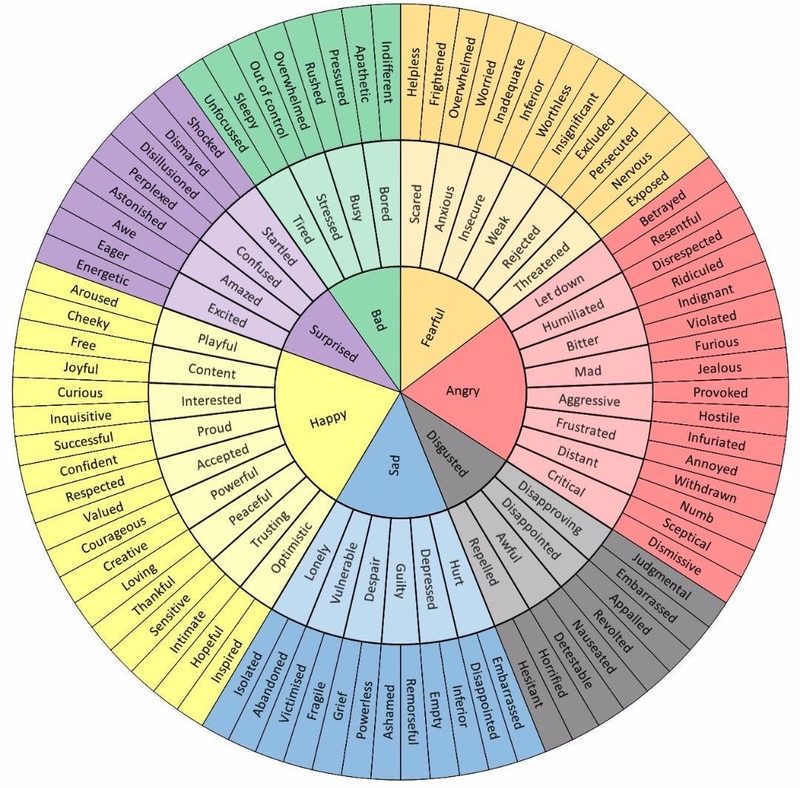
First, name the emotion precisely — the real one, underneath the surface. This is where the Emotion Wheel earns its keep: a vague feeling points nowhere, but a precise one points straight at a need. Then ask what it points to: what is the emotion telling me my need is? “I felt invisible in that meeting” points to a need for recognition. “I keep getting overruled on my own project” points to a need for autonomy. “I can’t switch off” points to a need for rest.
Then — and this is the step almost everyone skips — you turn that need into a clean request.
Most of us don’t make requests. We make complaints (“you never loop me in”) or demands (“you have to run this by me”). Both trigger defensiveness, because both put the other person on trial. A clean request is different. It is specific, it is time-bound, and it is genuinely optional — it gives the other person a real choice instead of a verdict.
The shape looks like this:
I feel ___ (precise emotion). The need underneath is ___ (universal need). Would you be willing to ___ by ___ (specific, time-bound ask)?
For example: “I felt dismissed when the proposal got skipped. What I needed was for the work to be acknowledged. Would you be willing to give me ten minutes at Thursday’s meeting to walk through it?” Same situation, completely different door.
Get curious about the need, not the person
The instinct when you’re triggered is to build a case against the other person. The more useful instinct is to get curious about the need under your own reaction. Ask: what did I need in that moment that I didn’t get? Recognition? Trust? A little autonomy? To simply be heard before we moved on?
Try it with your SQ Coach:
I’m feeling ___ and I think the unmet need underneath is ___. Help me turn that into one clean, synergetic request that opens a conversation instead of closing it.
Bring a real situation from this week, not a hypothetical.
Why this one skill changes relationships
The move from emotion to need to clean request is the difference between relationships that drain you and relationships that fuel you. Unnamed needs don’t disappear — they leak out as resentment, as sarcasm, as the same argument on a loop. Named needs, turned into clean requests, give the people around you a way to actually meet you.
It changes how you receive other people, too. Once you can hear the need under someone else’s sharp tone — “they’re not attacking me, they need to feel respected right now” — you stop matching their heat and start addressing their need. That is where conflict turns into connection. Most arguments that go in circles are two people defending positions while their real needs never get named; the moment one person names a need out loud, the whole shape of the conversation changes.
So this week: catch one frustration before it turns into a complaint. Name the emotion, find the need underneath it, and shape one clean request you could actually make. One clean request beats three complaints every time.
Awareness first. Processing next. SynerQ always. ∞
Related reading
 Name It to Tame It: The Feeling Underneath the Feeling "Fine" and "stressed" aren't emotions — they're escape hatches. The precise word for what you're feeling is the one that changes what happens next. The Meeting You Can't Stop Replaying — and What Your Body Already Knows Every week there's one meeting you can't stop replaying. That's not weakness — it's information. The practice is naming it in one word, so the next meeting lands different.
 Your Emotions Didn't Start With You — They Were Taught Before you had words for them, you learned which emotions were safe to show and which ones to hide. Naming that early conditioning — and what it still costs you at work — is where emotional intelligence actually begins. Reading the Room on a Remote Team Is a Skill You Build, Not One You Bring Distributed teams lose the ambient signal that in-person teams read for free. The fix isn't better cameras — it's replacing intuition with deliberate ritual that makes emotional data visible again. Psychological Safety Is the Price of Admission for Honest Feedback Feedback culture doesn't fail because people lack candor. It fails because it isn't safe to be candid. Psychological safety is the precondition, and it's built through response, not permission.