Emotional Intelligence on Teams Is a System Property, Not a Personality Trait
Emotional intelligence on a team isn't the sum of individual EQ scores. It's a property of how the team notices, names, and responds to what people are feeling — and it can be built deliberately.
Most conversations about emotional intelligence still treat it as something individuals carry around, like height. You either have a lot of it or you don’t, and hiring for it is a matter of finding the right people. That framing is comfortable because it lets a team off the hook. If EQ lives in individuals, then a low-EQ team is just an unlucky draw of personalities, not a problem anyone is responsible for fixing.
The research points somewhere more useful. When you look at what actually separates teams that perform under pressure from teams that fracture under it, the difference is rarely the average emotional intelligence of the members. It’s whether the group has built shared habits for noticing, naming, and responding to what people are feeling — as a system, in the open, before those feelings become behavior. Team emotional intelligence is not the sum of individual scores. It’s a property of the group.
Why the individual framing fails
Put five highly self-aware people in a room with no shared norms for surfacing tension, and they will each quietly manage their own discomfort while the group’s real signal goes unspoken. Each person is doing fine on their own EQ audit. The team is still flying blind. The failure isn’t a deficit of feeling; it’s a deficit of transmission.
This is why a team of individually thoughtful people can still be terrible at conflict, and why a team of unremarkable communicators can be unusually good at it. What matters is the collective protocol — the small, repeated moves that let a group turn private emotional data into shared information the team can act on. Studies of team performance consistently find that groups with strong interaction norms outperform groups selected purely on individual talent, and that the gap widens exactly when the work gets hard.
The three moves a team-level system makes
Emotionally intelligent teams do three things well, and each of them is a group behavior, not a personal quality.
They notice. Someone tracks the emotional temperature of the room and treats a change in it as information, not noise. When a normally vocal person goes quiet in a review, that is data. Teams that notice well have someone — often several people — who registers the shift and doesn’t let it pass.
They name. Noticing is useless if nobody says anything. Naming is the act of putting the unspoken thing into words the group can respond to: “I think we’re talking past each other,” or “this decision seems to be landing harder than we expected.” Naming is where most teams fail, because it feels risky. Whether people will name what they notice depends almost entirely on the team’s psychological safety — which is why safety and feedback are so tightly coupled to emotional intelligence that you can’t build one without the other.
They respond. Once something is named, the team either metabolizes it or punishes the person who raised it. Respond well often enough and naming becomes cheap; respond badly once and it goes underground for months. The response is the reinforcement signal that trains the whole loop.
This gets harder when the room is virtual
Every one of those moves leans on ambient signal — tone, pacing, the pause before someone answers, who’s leaning back. Distributed and asynchronous teams lose most of that bandwidth. The emotional data is still there; the team just can’t see it as easily. That’s why reading the room on a remote team is a distinct skill rather than the same skill over a worse connection: the noticing step, in particular, has to become deliberate because it can no longer be automatic.
Teams that stay emotionally intelligent while distributed do it by replacing ambient signal with explicit ritual — structured check-ins, written surfacing of tension, deliberate space for the quiet person to weigh in. It feels heavier than an in-person team needs. It is. The alternative is a team that has quietly stopped noticing and doesn’t know it yet.
What you can actually build
The good news in treating team EQ as a system property is that systems are buildable. You can’t raise anyone’s dispositional emotional intelligence by much, and you shouldn’t try. But you can absolutely change how often a team notices, how safe it is to name, and how well it responds — and those are the variables that move performance.
In practice that means a few unglamorous things. Make surfacing tension a normal part of the work, not a special event. Reward the person who names the hard thing instead of the person who kept the meeting smooth. Give the loop somewhere to live — a recurring moment where the team’s emotional state is a legitimate agenda item and not an interruption. And when the team is distributed, build the ritual that stands in for the ambient signal you’ve lost.
None of this shows up on an individual assessment. All of it shows up in whether the team can hold together when the work is genuinely hard. That’s the only test of emotional intelligence that has ever mattered for a team, and it’s one you can prepare for on purpose.
Across the teams we’ve worked with, the pattern is consistent: roughly 3 in 4 of the moments people later described as “when this team clicked” traced back to a group response to a hard feeling, not to any single person’s composure. Team-level EQ, in other words, is where the signal lives.
Related reading
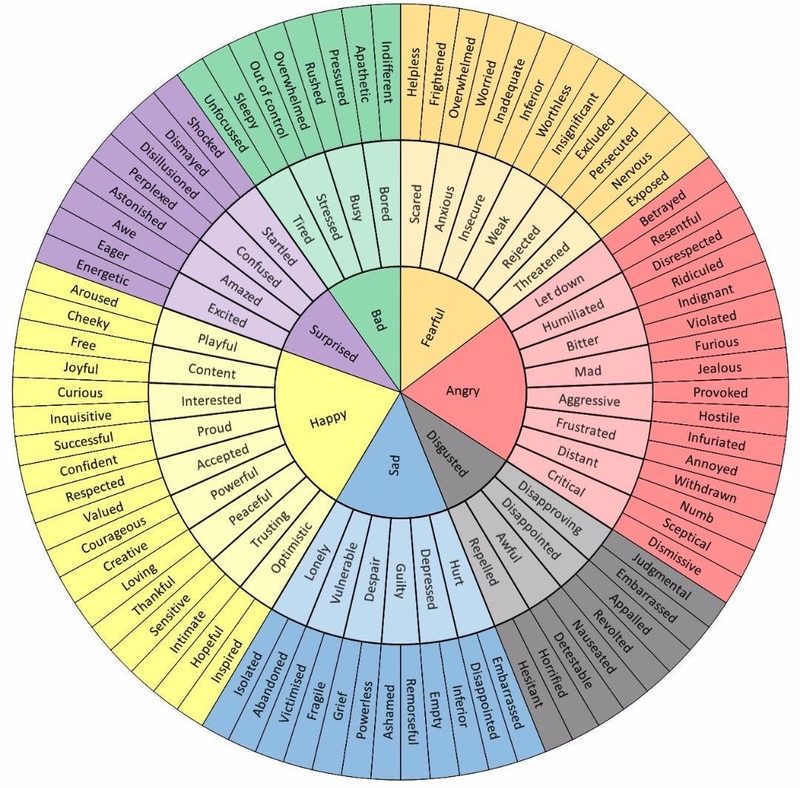 Name It to Tame It: The Feeling Underneath the Feeling "Fine" and "stressed" aren't emotions — they're escape hatches. The precise word for what you're feeling is the one that changes what happens next.
 Your Emotions Didn't Start With You — They Were Taught Before you had words for them, you learned which emotions were safe to show and which ones to hide. Naming that early conditioning — and what it still costs you at work — is where emotional intelligence actually begins.
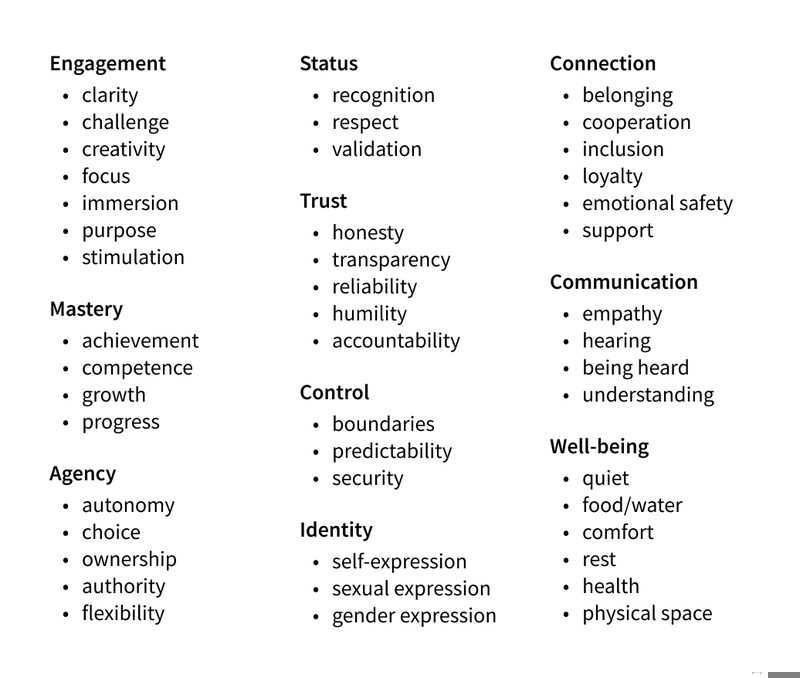 You're Not Too Sensitive — You Have an Unmet Need Every trigger is a need asking to be heard. Name the need underneath the reaction and you stop fighting people and start solving the actual problem.